
India is set to host the SCO Civilisational Dialogue Forum in New Delhi from November 20-22, with 15 countries, including China, Kazakhstan, and Iran, confirming participation. Union Culture Minister Gajendra Singh Shekhawat expressed hope for Pakistan's attendance, emphasizing the cultural commonalities despite geopolitical differences. The forum aims to reinforce cultural relations and showcase India's rich civilisational history.

Prime Minister Narendra Modi hosted Iranian President Masoud Pezeshkian in New Delhi for talks focusing on the West Asia situation, bilateral relations, and BRICS cooperation. The meeting, Pezeshkian's first visit to India as president, comes amidst heightened tensions in West Asia due to new US sanctions on Iran and concerns over global oil supplies from the Strait of Hormuz. Both leaders emphasised regional stability and economic resilience.

Beijing has strongly criticised new US export controls on advanced semiconductor chips to five countries, viewing them as an attempt to prevent diversion to China. This condemnation comes just before US President Donald Trump's visit to Shenzhen for the APEC summit, where geopolitical tensions, including China's opposition to the Quad, are also in focus.

India's Indo-Pacific approach has traditionally emphasised strategic autonomy, ASEAN centrality, freedom of navigation, respect for international law and an inclusive regional order. Its growing defence and maritime partnerships with Australia, Japan, Indonesia, Vietnam and other Southeast Asian countries provide additional depth to this approach, point out Dr Kumar and Dr Jasmeet Kaur.
Pakistan is currently deliberating its participation in the Shanghai Cooperation Organisation's Civilisational Dialogue Forum, scheduled to be held in India later this month. The invitation from India is significant given the historically strained bilateral relations, particularly after recent military confrontations and India's consistent concerns about cross-border terrorism.

Iran's powerful secretary of the supreme national security council Major General Mohsen Rezaei has issued a warning to the US after Donald Trump indicated that the war is unlikely to resume.

Top Quad leaders announced new initiatives including a maritime surveillance system, military exercise, cable connectivity, and cybersecurity partnership to strengthen cooperation in the Indo-Pacific. They also opposed destabilising actions and economic coercion, reaffirming their commitment to a free and open region.

In recent years, China and Russia have pushed for de-dollarisation within BRICS, which India has resisted. One reason is that India does not want to hurt its relationship with the United States, and another is the fear of China controlling trade because the renminbi is considered the strongest currency in the bloc today.

Lakshmi Venu, daughter of TVS Group's Venu Srinivasan, has formally sought a partition of the joint family assets, citing her equal rights under the Hindu Succession Act, 1956, as amended in 2005. This move escalates a succession dispute over the ownership and control of key businesses within the prominent Indian automobile group.

US President Donald Trump received a grand welcome from Chinese President Xi Jinping in Shenzhen for the APEC Economic Leaders' Meeting, culminating in an unprecedented trilateral meeting with Russian President Vladimir Putin. The leaders discussed critical global issues including the Ukraine conflict, Iran, artificial intelligence, and nuclear arms reduction, marking significant political gains for each leader on the international stage.

The United Arab Emirates (UAE) has expressed intent to invest an additional $25 billion in India, with an ultimate goal of reaching $100 billion in investments, Union Minister Piyush Goyal announced. This comes as both nations plan to enhance cooperation in shipping, ports, energy, and emerging technologies, against a backdrop of expanding bilateral trade.

US President Donald Trump, Chinese President Xi Jinping, and Russian President Vladimir Putin held an unprecedented trilateral meeting at the APEC Economic Leaders' Meeting in Shenzhen, discussing global conflicts, nuclear arms reduction, and artificial intelligence.

Defence Minister Rajnath Singh on Tuesday called for dialogue and diplomacy to resolve global conflicts, stating, "war can never be the answer to war," while addressing the Shanghai Cooperation Organisation (SCO) Council of Heads of Government meeting in Dushanbe, Tajikistan.

India has voted in favour of a UN General Assembly resolution urging the US to end its economic, commercial, and financial embargo against Cuba. The resolution, adopted on Wednesday, saw 130 countries support the call to lift restrictions that have severely impacted Cuba's economy, healthcare, and food production. The article also details a heated exchange between US and Cuban diplomats during the UNGA session.
The second such dialogue is aimed at discussing ways to enhance investments and business engagement between the two of the fastest growing economies, significantly at a time when the western world is in deep crisis.

Following an intervention from Rajinikanth, Hrithik decided to take zero remuneration for the role.

An Indian sailor was killed in an attack on a commercial vessel near Limah, Oman, last evening, prompting India to strongly condemn the strike and call for immediate de-escalation of tensions in West Asia. This incident brings the total number of Indian nationals killed in the region's conflict since February to 23, including 15 seafarers. India is pushing for a diplomatic solution to restore peace and stability.

United States special envoy Steve Witkoff engaged in high-stakes talks with Russian President Vladimir Putin on Wednesday in St. Petersburg. The aim of the meeting was to advance proposals to end the war in Ukraine and establish a pathway towards broader negotiations.

External Affairs Minister S Jaishankar stated that the world is entering an age of flux marked by conflicts and tariff volatility, requiring India to respond effectively to these challenges. He reiterated India's consistent stance on the Russia-Ukraine conflict, advocating for dialogue and diplomacy, and highlighted India's efforts to engage with both sides. Jaishankar also emphasised India's role in championing the voice of the Global South and navigating complex strategic partnerships in a multi-aligned world.

India does not need to win the model race to win the AI era. It needs to be the country that cannot be switched off, can be trusted by its citizens, and is useful to the rest of the world, asserts Rajeev Srinivasan.

Indigenous communities fear that a large reservoir could submerge ancestral land and settlements, disrupt traditional livelihoods and damage forests, wildlife habitats and river ecosystems in a seismically active Himalayan region.

The objective should be clear: Energy security without abandoning environmental responsibility; water security without ignoring local concerns; and strategic resilience without sacrificing public confidence, notes Varun Arya.

The Indian Institute of Technology (IIT) Bombay has released 'anti-discrimination guidelines' advising students, faculty, and staff against inquiring about birth, admission category, or entrance exam ranks to prevent bias. This move follows the suicide of student Sahil Wakode, whose parents alleged caste discrimination. The guidelines also prohibit hateful messages and aim to foster inclusivity on campus.

Western Australia Premier Roger Cook emphasised cricket's pivotal role in enhancing India-Australia relations, fostering business development, economic ties, and trade. He highlighted the upcoming Big Bash League match in Chennai and the opening of the University of Western Australia campus in Mumbai as key initiatives strengthening bilateral cooperation and cultural exchange.

Union Minister Rajnath Singh has accused the Congress and its allies of attempting to instigate a 'Bangladesh-like regime change' in India, leveraging youth energy for political confrontation and anarchy, rather than constructive nation-building.

Chinese President Xi Jinping is set to visit the United States from September 23 to 25 for summit talks with US President Donald Trump, with discussions expected to cover critical economic and trade issues, including AI, and the recently signed US sanctions law targeting countries buying Russian oil and gas.
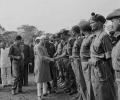
The conversations on July 22 and 23, 1962, meetings in Geneva between V K Krishna Menon, India's defence minister at the time, and Chinese vice premier Chen Yi are important because, had they been followed up, the subsequent border war may perhaps have been avoided, notes former foreign secretary Shyam Saran.
BRICS leaders, in their New Delhi Declaration 2026, have called for wider access to Artificial Intelligence resources and stronger international cooperation to ensure the technology is safe, secure, inclusive, and reliable. The declaration outlines a broad technology agenda covering AI, cybersecurity, digital public infrastructure, telecom, quantum technologies, and advanced manufacturing, committing to implement the grouping's statement on 'Global Governance of Artificial Intelligence'.

'My biggest fear about AI is that humans are going to rush to deploy it before AI is ready.'

External Affairs Minister S Jaishankar has publicly acknowledged India's intensified diplomatic efforts to resolve the Ukraine conflict, engaging directly with both Kyiv and Moscow. India is focusing on critical issues like Black Sea shipping safety, grain exports, and energy supplies, moving beyond its previous advocacy role. Jaishankar also highlighted India's historical ties with Russia and discussed the evolving global geopolitical landscape, including the repositioning of the US and the rise of China.
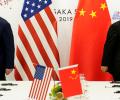
Top US and Chinese officials, including Vice Premier He Lifeng and Treasury Secretary Scott Bessent, held "candid, in-depth and constructive" talks in New York on economic and trade issues, with a specific focus on artificial intelligence. These discussions precede Chinese President Xi Jinping's anticipated visit to Washington and occur amidst new US sanctions targeting countries purchasing Russian oil and gas, and the US unveiling an "AI Force."

India's ruling Bharatiya Janata Party (BJP) is actively courting Sri Lanka's Janatha Vimukthi Peramuna (JVP), a Marxist party with strong Sinhalese nationalist roots, marking a significant shift in bilateral relations despite ideological differences. This engagement, highlighted by a recent high-profile visit by JVP leader Tilvin Silva, aims to foster cooperation on economic projects and address New Delhi's concerns over slow progress in India-aided initiatives in the island nation.

The BRICS grouping adopted a consensus joint declaration in New Delhi, successfully navigating differences on the West Asia conflict but notably omitting any direct mention of US strikes on Iran or Iranian military attacks on Gulf Arab nations. The declaration also criticised Israel's actions in Gaza and called for a concerted approach against terrorism.

Chinese President Xi Jinping concluded his three-day visit to the US, stating that his discussions with President Donald Trump had injected "new substance" into the China-US relationship. Both leaders expressed optimism for future cooperation, with agreements reached on certain trade goods and discussions held on AI capabilities.

For India, the goal is not simply to host another grand diplomatic gathering. It is to prove that a diverse coalition of emerging powers can still deliver.

Iranian President Masoud Pezeshkian concluded his visit to India for the 18th BRICS Summit, announcing that Iran and the UAE agreed to move past previous tensions. This diplomatic breakthrough occurred during talks with Abu Dhabi's Crown Prince on the summit sidelines. Pezeshkian also met with PM Modi to discuss bilateral ties and West Asia developments, with Modi emphasising dialogue for regional peace. The BRICS summit adopted the New Delhi Declaration 2026, calling for global governance reforms and de-escalation in West Asia.

Russian President Vladimir Putin is set to visit India for a three-day trip to attend the 18th BRICS Summit and engage in bilateral discussions with Prime Minister Narendra Modi. The summit will focus on strengthening strategic partnerships and addressing international issues, with Putin also scheduled to meet other world leaders.

Prime Minister Narendra Modi and Russian President Vladimir Putin held extensive discussions to strengthen bilateral trade, defence, and energy cooperation, while also addressing the ongoing Ukraine conflict and exploring avenues for peace and resolution, with Modi reiterating India's call for dialogue and diplomacy.

Former Army chief General Manoj Naravane asserted that while India's immediate attention is on Pakistan due to terrorism, China will be New Delhi's primary long-term competitor across political, economic, trade, and military domains, necessitating a strong military deterrence alongside dialogue.

BRICS members have expressed 'serious concerns' over the unilateral imposition of trade and finance-related measures, including higher tariffs and non-tariff barriers, stating these actions distort trade and are inconsistent with WTO rules. The grouping also highlighted elevated risks to the global economic outlook due to geopolitical tensions, trade fragmentation, and protectionism.
